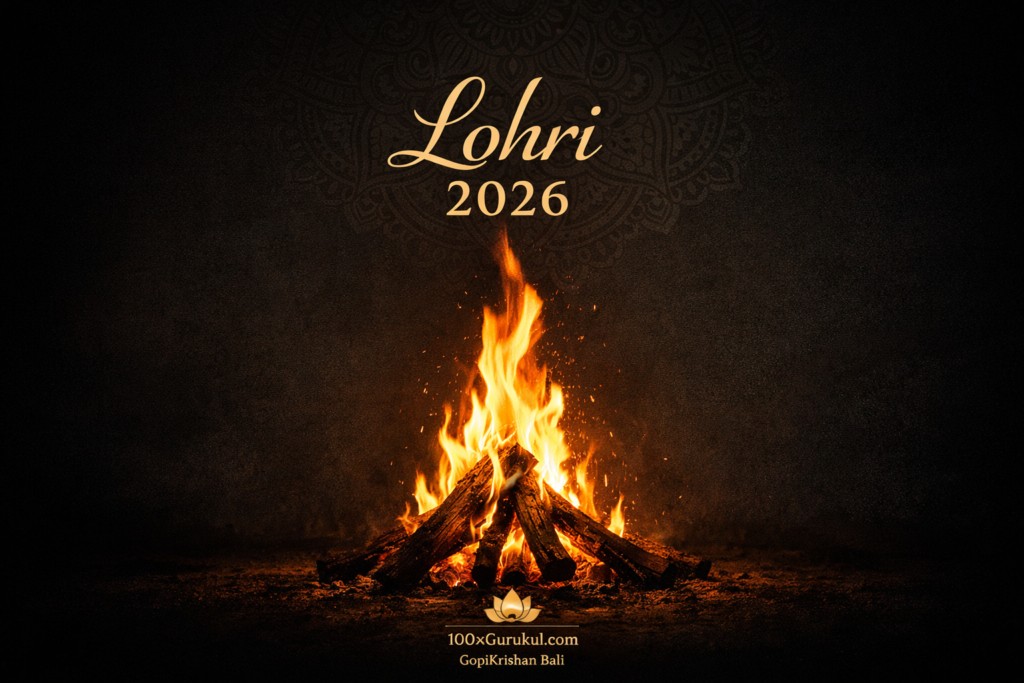
A Deep Cultural, Seasonal, and Transformational Narrative
Lohri, celebrated every year on 13 January, stands at the crossroads of seasonal transition, cultural memory, community gratitude, and human aspiration. On this day, communities across North India — especially Punjab, Haryana, Himachal Pradesh, Jammu & Kashmir, and Delhi — come together in ritual, song, and fire to honour a cycle much older than recorded history.
This year, Tuesday, 13 January 2026 offers not merely the observance of a harvest festival, but also an invitation: to integrate ancient paradigms of cosmic alignment, community, resilience, and gratitude into how we think, work, and lead. Lohri becomes both a tradition and a template for 21st-century life and work alignment.
I. The Ancestral Essence of Lohri – Symbolism and Seasonal Intelligence
1. From Winter Solstice to Uttarayan Transition
Lohri is intrinsically tied to the Agricultural and Solar calendar. Observed on the final night of the month of Paush, it marks the end of deep winter and precedes Uttarayan – the Sun’s northward journey beginning on Makar Sankranti the next day. In ancient Indian cosmology, Uttarayan symbolises increase in light, energy, and movement — from inactivity to growth.
This seasonal shift is not merely meteorological; in the Ṛgveda and later Sanskrit shastras, the journey of the sun is recognised as a rhythm that connects human existence with cosmic order. Lohri’s bonfire becomes a ritual mirror of that cosmic signal, signalling movement from contraction to expansion.
2. Ritual Fire — Agni as Purifier, Catalyst, and Transformer
Central to Lohri is the bonfire — Agni Dev’s presence in community life. At sunset, families gather and offer:
- Sesame (til)
- Jaggery (gur)
- Peanuts and popcorn
- Sugarcane and other Rabi produce
These offerings symbolise gratitude for nourishment and warmth while acknowledging light’s return to longer days.
Fire in Indian spiritual metaphors operates at multiple levels:
- Agni as purifier of stagnation
- Agni as harbinger of productivity and warmth
- Agni as fusion of community consciousness
This becomes a powerful metaphor for transformational leadership: identifying residual cold (rigid mental models) and releasing them into a fire of re-creation.
II. Stories, Folk Memory, and Cultural Unity
1. The Legend of Dulla Bhatti: Courage and Compassion
The folk hero Rai Abdullah Bhatti – popularly Dulla Bhatti – is closely associated with Lohri celebrations. A figure in Punjabi folklore, Bhatti opposed injustice during the Mughal period, saving girls slated for forced servitude and arranging their dignified marriages. His acts of courage and compassion are immortalised in traditional Lohri songs such as ‘Sundri Mundriye’.
This narrative resonates with universal human values:
- Protection of the vulnerable
- Leadership grounded in justice
- Community welfare as shared destiny
2. Folk Songs and Communal Participation
Children and adults alike sing Lohri songs at homes and gatherings, invoking collective memory, shared identity, and future aspirations. Ritual songs serve as living repositories of wisdom, blending ecological gratitude with social cohesion.
III. Rituals in Practice: Anatomy of a Lohri Celebration
1. Pre-Sunset Preparations
- Gathering wood, cow dung cakes, and agricultural produce
- Decorating ritual space around fire
- Preparing characteristic foods (til-gur laddus, revri, gajak)
2. Bonfire and Offerings
At sunset, participants circle the fire, offering til, gur, and produce, praying for health, wealth, and prosperity.
3. Music, Dance, and Cultural Expression
The bonfire is not silent – it echoes with:
- Bhangra and Giddha
- Traditional drums and folk melodies
- Community singing and shared storytelling
This confluence of movement, rhythm, and sound reflects the innate human synchrony that arises in group celebration.
4. Food, Distribution, and Gratitude
Special foods especially those made from sesame and jaggery are shared. These ingredients carry Ayurvedic logic too, they supply heat and energy appropriate for the cold season, balancing vāta and kapha doshas.
IV. Regional Variations and Pan-India Resonance
Although most prominent in Punjab, Lohri, by its essence resonates with other seasonal festivals across India:
| Region | Analogous Festival | Seasonal Significance |
|---|---|---|
| Tamil Nadu | Pongal | Harvest gratitude |
| Gujarat | Makar Sankranti / Uttarayan | Sun’s northward shift |
| Assam | Magh Bihu | Mid-winter harvest |
| North India | Maghi | First day of Maagh (post-Lohri) |
What varies is expression but the underlying logic is shared: gratitude for abundance, community solidarity, and seasonal rhythm.
V. Lohri as a Framework for 100xBHARAT
1. Gratitude as a Leadership Principle
Lohri teaches us to acknowledge sources beyond individual effort – nature, community, ancestors, and shared participation. In leadership frameworks, gratitude cultivates resilience, empathy, and systemic thinking.
2. Transition and Transformation
Just as the festival marks a shift from winter to light, individuals and organisations can adopt ritual benchmarks to celebrate progress, not just outcomes.
3. Community-Centric Evolution
Lohri emphasises:
- Shared feast rather than isolated achievement
- Singing rather than silent success
- Public ritual rather than private aspiration
These align with community co-creation and collective intelligence essential for a 100x Tribe.
4. Aligning Inner and Outer Seasons
In ancient Indian knowledge systems, human life aligns with solar and lunar cycles – a reminder that biological cycles and work cycles can harmonise for sustainable performance.
Conclusion:
Lohri is more than a festival. It is a living metaphor for endings, beginnings, and human convergence. As we celebrate 13 January 2026, the flame of the bonfire can symbolise an inner flame – a light that burns stagnation, celebrates collective wisdom, honours gratitude, and emboldens us to lead with compassion and courage.
May the fire of this Lohri kindle clarity, community, and capacity — not just in hearts, but in how we learn, love, live, and lead forward.